From the archive · Substack
Navigating Bear Markets: Cash Flow and Value Strategies for Discerning Investors
Introduction
As global equity markets grapple with stagnation—the S&P 500 has traded within a narrow 5% band year-to-date, while the MSCI World Index remains 15% below its 2021 peak—investors face a familiar dilemma: how to safeguard capital while positioning for eventual recovery. The answer, as illuminated by the philosophies of Warren Buffett’s late partner Charlie Munger and value-investing pioneer Benjamin Graham, lies not in timing the market but in structuring portfolios around cash flow resilience and margin of safety.
Consider the evidence:
Dividend-paying equities outperformed non-payers by 2.3% annually during bear markets from 1973 to 2023, according to a 2023 analysis by Hartford Funds.
U.S. REITs delivered a 10.2% annualized return over the past three decades, outpacing the S&P 500’s 9.7% (National Association of Real Estate Investment Trusts).
Below, we analyze five actionable strategies for both accredited and non-accredited investors to navigate today’s challenges, blending income generation with prudent capital allocation.
Dividend Aristocrats: The Bedrock of Defensive Portfolios
Rationale: Companies with 25+ years of consecutive dividend growth—including Johnson & Johnson and AbbVie—have demonstrated an ability to sustain payouts through multiple economic cycles. Dividends account for 40% of the S&P 500’s total returns since 1930 (S&P Global), offering a buffer in downturns.
Implementation:
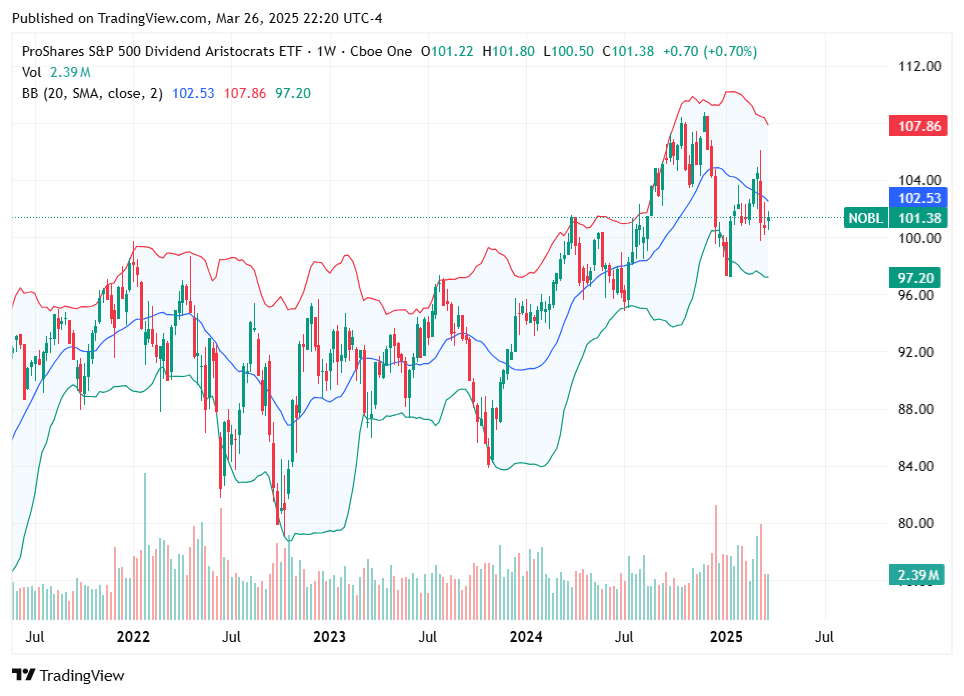
Public Markets: ETFs such as the ProShares S&P 500 Dividend Aristocrats ETF (NOBL) provide diversified exposure.
Margin of Safety Focus: Screen for payout ratios below 60% and free cash flow yields exceeding 4% (per Graham’s emphasis on earnings durability).
Munger’s Insight:
“The big money is not in the buying and selling, but in the waiting.” Reinvested dividends compound quietly, turning market weakness into long-term advantage.
 Open original image in a new tab
REITs: Real Estate Income Without Operational Burdens
Strategic Advantage: Publicly traded REITs, mandated to distribute 90% of taxable income, offer yields averaging 3.8%—nearly double the S&P 500’s 1.6% (Nareit, Q2 2023). Industrial and healthcare REITs, in particular, have shown resilience, with 7% annualized NOI growth since 2020.
Key Opportunities:
Data Center REITs (e.g., Digital Realty Trust): Demand fueled by AI expansion, with projected 11% annual sector growth through 2030 (Grand View Research).
Mortgage REITs: Agency mREITs like Annaly Capital Management now yield 12%, with book values stabilizing as interest rate volatility eases.
Risk Mitigation: Limit exposure to office and retail sectors, where vacancy rates exceed 15% (Cushman & Wakefield).
Treasury Securities: Capital Preservation Amid Volatility
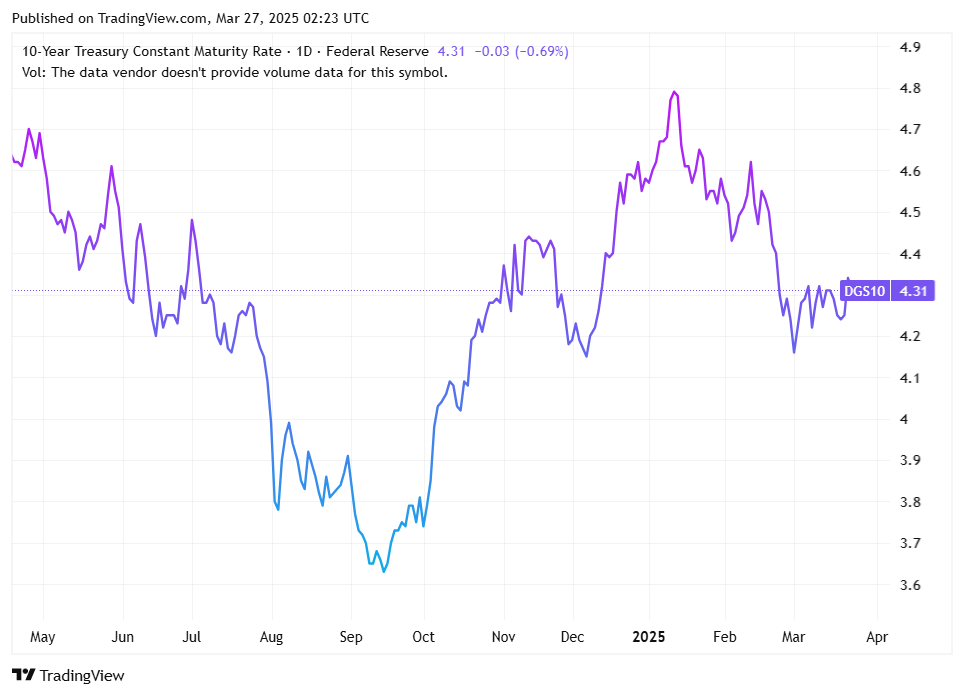
Current Landscape: With 10-year Treasury yields at 4.3%—near a 15-year high—and inflation expectations moderating, real returns now approach 1.5% (Federal Reserve Bank of St. Louis). Short-dated T-bills yield 5.4%, providing a cash-equivalent haven.
Graham’s Wisdom:
“The investor’s chief problem—and even his worst enemy—is likely to be himself.” Allocating 20–30% to Treasuries curtails behavioral missteps during sell-offs.
Execution:
Direct purchases via TreasuryDirect.gov (minimum $100).
ETFs: iShares 0-3 Month Treasury Bond ETF (SGOV) for liquidity; iShares TIPS Bond ETF (TIP) for inflation hedging.
 Open original image in a new tab
Created with TradingView (opens in a new tab)Original image source (opens in a new tab)
Gold and Commodities: Strategic Hedges, Not Speculation
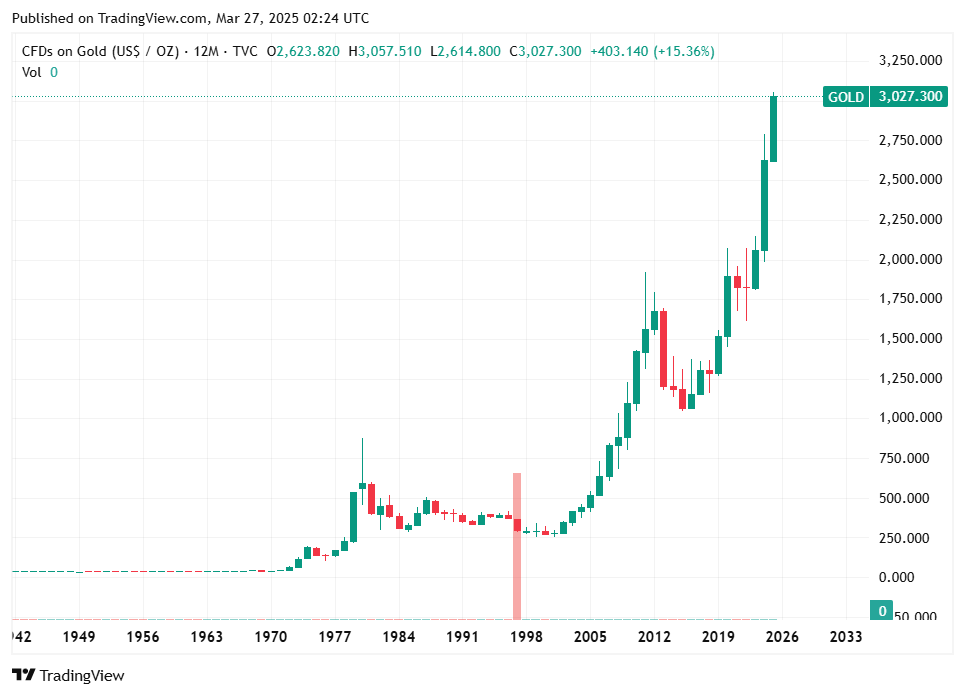
Historical Context: Gold has appreciated 6% annually since 2000, outperforming global equities during the 2000–2002 and 2007–2009 bear markets (World Gold Council). Industrial metals like copper—critical for electrification—are projected to rise 20% by 2025 as green infrastructure spending accelerates (BloombergNEF).
Implementation:
Physical Exposure: SPDR Gold Shares (GLD) or Invesco DB Commodity Index Tracking Fund (DBC).
Equity Alternatives: Freeport-McMoRan (copper) or Albemarle (lithium) for leveraged commodity exposure.
Caveat: Limit commodities to 5–10% of portfolios, as per Graham’s diversification principles.
 Open original image in a new tab
Private Market Access for Non-Accredited Investors
Democratization Trends: While traditional private equity requires SEC accreditation, retail investors can now access alternatives via:
Interval Funds: Blue Owl Capital’s OWLET (6.5% yield; quarterly liquidity).
Crowdfunding Platforms: Yieldstreet’s Private Credit Fund ($2,500 minimum; 8–12% target returns).
Due Diligence Imperative:
Scrutinize fee structures (aim for <2% management fees).
Prefer funds with >5-year track records and transparent valuation methodologies.
The Munger-Graham Framework: A Synthesis
Allocate Proactively: 50% to cash flow assets (dividends, REITs, bonds), 30% to value-oriented equities, 20% to hedges (gold, commodities).
Reinvest Mechanically: Direct dividends into undervalued sectors (e.g., small-cap value stocks trading below book value).
Ignore Noise: As Graham noted, “In the short run, the market is a voting machine. In the long run, it is a weighing machine.”
Conclusion
Bear markets, while unnerving, separate tactical allocators from reactive speculators. By anchoring portfolios in cash flow durability and Graham’s margin of safety—while selectively capitalizing on dislocations—investors can transform stagnation into strategic advantage.
Final Word:
“The best decades happen when you’re not having fun,” Munger once remarked. Patience, not panic, remains the ultimate edge.
Disclaimer: The content provided in The Daily Condense is for informational purposes only and reflects our opinions, not financial advice. We are not financial advisors, and nothing herein should be construed as a recommendation to buy, sell, or hold any investment or financial product. Always conduct your own research or consult a qualified financial advisor before making any financial decisions.