From the archive · Substack
Economic Downturns and the Flight to Safety
 Open original image in a new tab
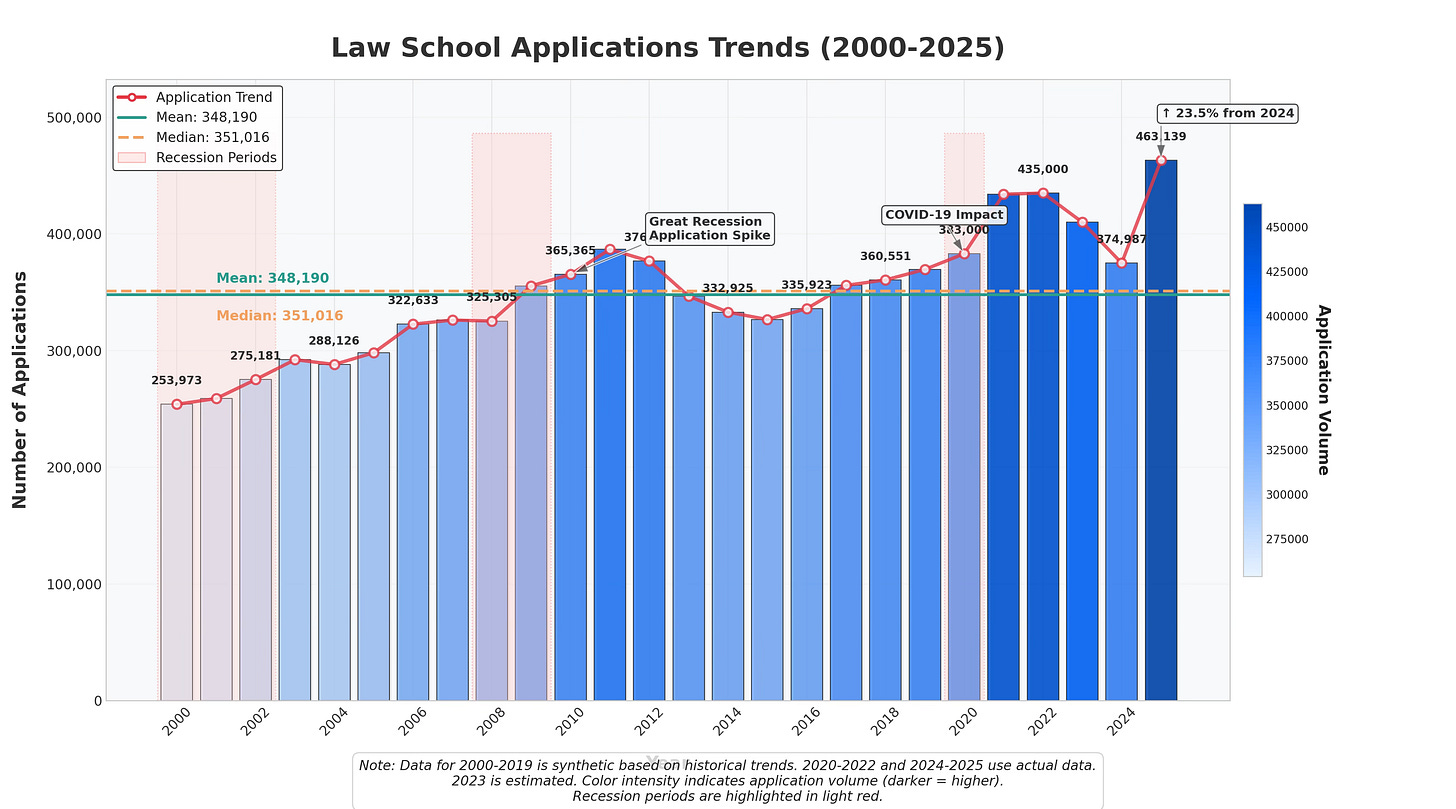
There’s a clear correlation between economic uncertainty and increased enrollment in traditionally “safe” professions—particularly law, medicine, and other fields perceived as stable, reliable sources of income. This isn’t a new phenomenon; we saw it during the COVID-19 pandemic, the Great Recession, and now we’re seeing it again.
 Open original image in a new tab
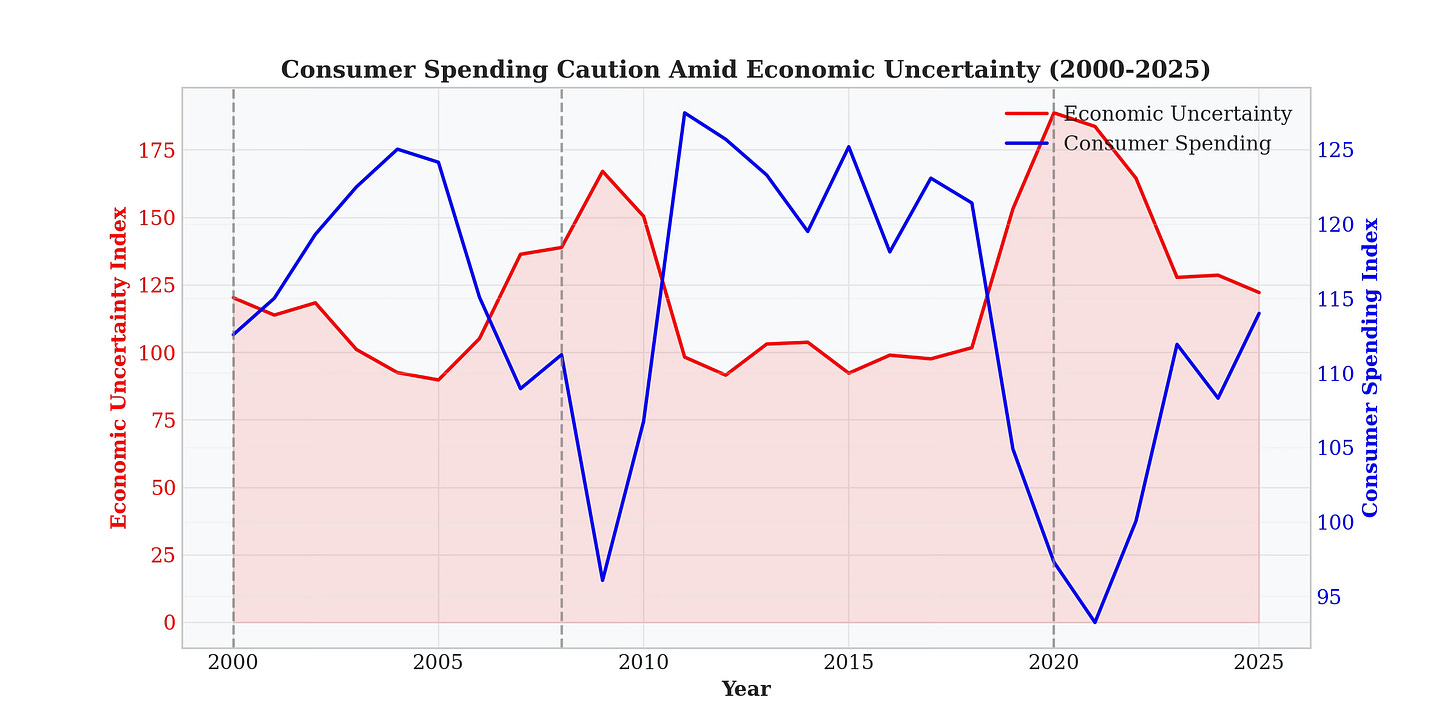
Why is consumer confidence weakening? Much of the cash influx that fueled recent inflationary growth—like pandemic-era stimulus and other government spending—has dried up. As that money stops flowing, the average consumer is left grappling with the consequences of prolonged high inflation. Costs remain elevated, eating into any temporary gains that consumers may have experienced. Essentially, the everyday consumer is back to square one, feeling less optimistic about future economic growth.
Compounding this uncertainty is the recent bursting of the “AI bubble.” Companies like NVIDIA, which saw astronomical valuations driven by AI hype, are now facing serious questions about whether their earnings were artificially inflated. These inflated valuations, reflected in massive P/E ratios, don’t seem sustainable—especially now that investors and analysts are growing skeptical of their long-term productivity and profitability.
 Open original image in a new tab
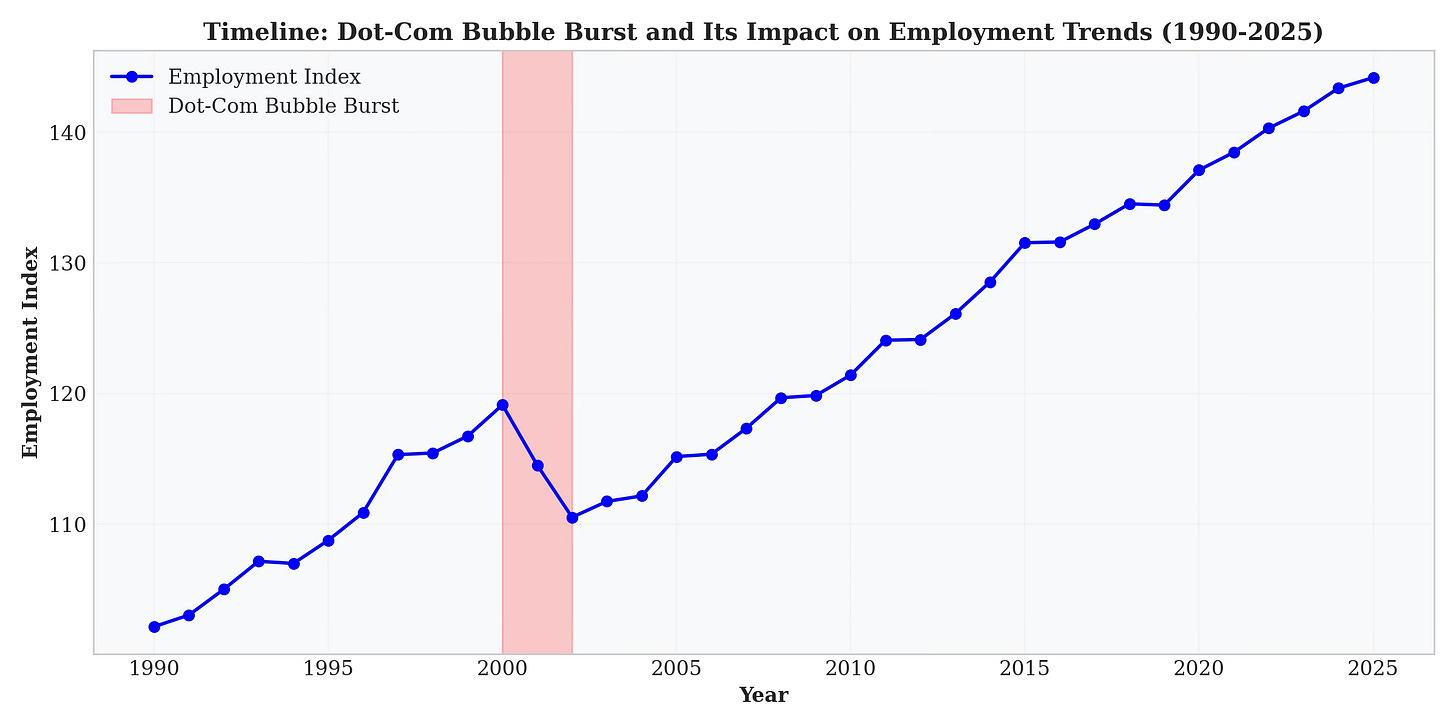
Historically, we’ve seen similar patterns. During the dot-com bubble, optimism about rapid technological advancements far outpaced reality. When that bubble burst, it became clear that meaningful productivity gains wouldn’t happen overnight. They would take years, even decades, to materialize fully. In the meantime, the labor market was forced into a painful period of recalibration.
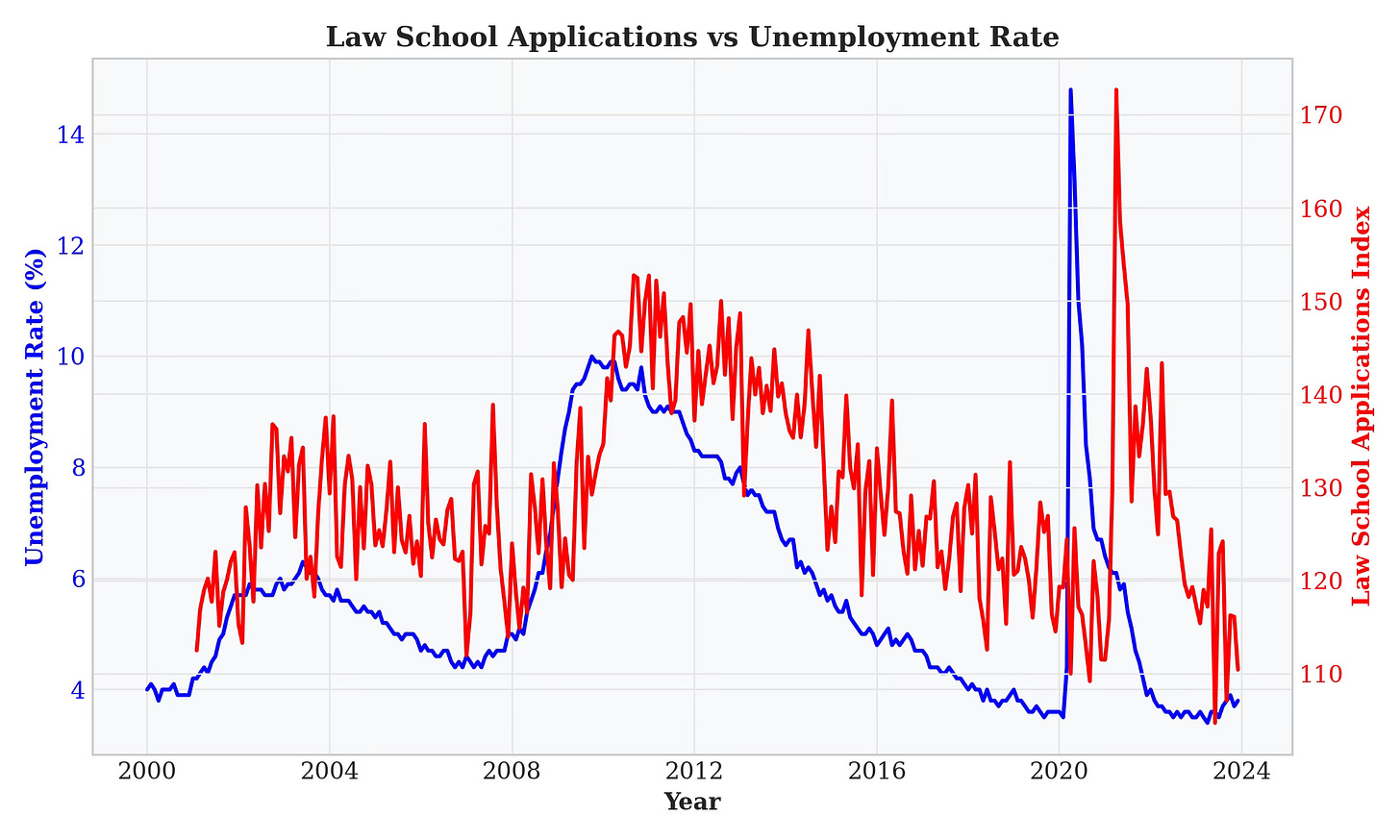
Today, we’re experiencing something similar. AI promises huge productivity boosts, but practical applications are lagging behind expectations. The result? Workers and job-seekers feel uncertain about their career paths. They’re wary of investing their future in industries that might be heavily disrupted or even made obsolete by evolving technologies. So, they’re turning back to fields that feel safer in the short term—law being a primary example.
 Open original image in a new tab
Of course, law isn’t immune from technological disruption. AI will inevitably reshape the legal industry, too—but the timeline is longer. Unlike many sectors, law simply can’t afford errors, hallucinations, or inaccuracies from AI. Hallucinations—AI’s tendency to confidently produce incorrect or fabricated information—remain its Achilles’ heel, and solving this critical flaw has proven far more challenging than initially expected. Even several years after ChatGPT captured public attention, AI reliability is still very much a work in progress.
Ultimately, we’re witnessing the real-time consequences of overextended hype. Patience has worn thin, and now people are shifting back to what they perceive as stable ground. The increased interest in law school isn’t just about law itself; it symbolizes a broader societal flight to safety—a collective move toward stability amid uncertainty.
In short, until the path forward becomes clearer, expect to see continued surges in enrollment for law schools and other “safe harbor” professions. It’s a cycle we’ve seen before, and one we’re destined to see again.
Be part of the solution, not the uncertainty.
Connect with a community of ambitious, stability-minded individuals who are confidently navigating today’s economic storms. Choose a profession in law or traditional fields, and take charge of your future today.
Inspiration: https://www.wsj.com/us-news/education/law-school-application-increase-job-market-623bb314 (opens in a new tab)