From the archive · Substack
How McDonald’s Filet-O-Fish Turned a Lenten Challenge into a Marketing Masterpiece
A Lenten Memory Growing up in a small town, Lent was a season marked by fish fries, church gatherings, and my family’s unwavering Friday tradition of abstaining from meat. As a kid, what stuck with me was the solemnity of the season, but also the catchy jingle from McDonald’s Filet-O-Fish commercials that dominated TV. “Give me back that Filet-O-Fish, give me that fish!” The tune became as familiar as the scent of fry oil in the church's kitchen signaling the season of Lent. Years later, as a young professional, I realized this wasn’t just a clever ad—it was a masterclass in turning cultural observance into opportunity.
The Birth of a Lenten Fast Food Tradition The Filet-O-Fish wasn’t just a menu item; it was a solution to a problem. Here’s why it matters:
Cultural Sensitivity: By addressing Catholic customers during Lent, McDonald’s showcased adaptability to local needs.
Problem-Solving Innovation: A seasonal slump became a year-round success.
Grassroots Insight: Franchisee Lou Groen’s observation sparked a national phenomenon.
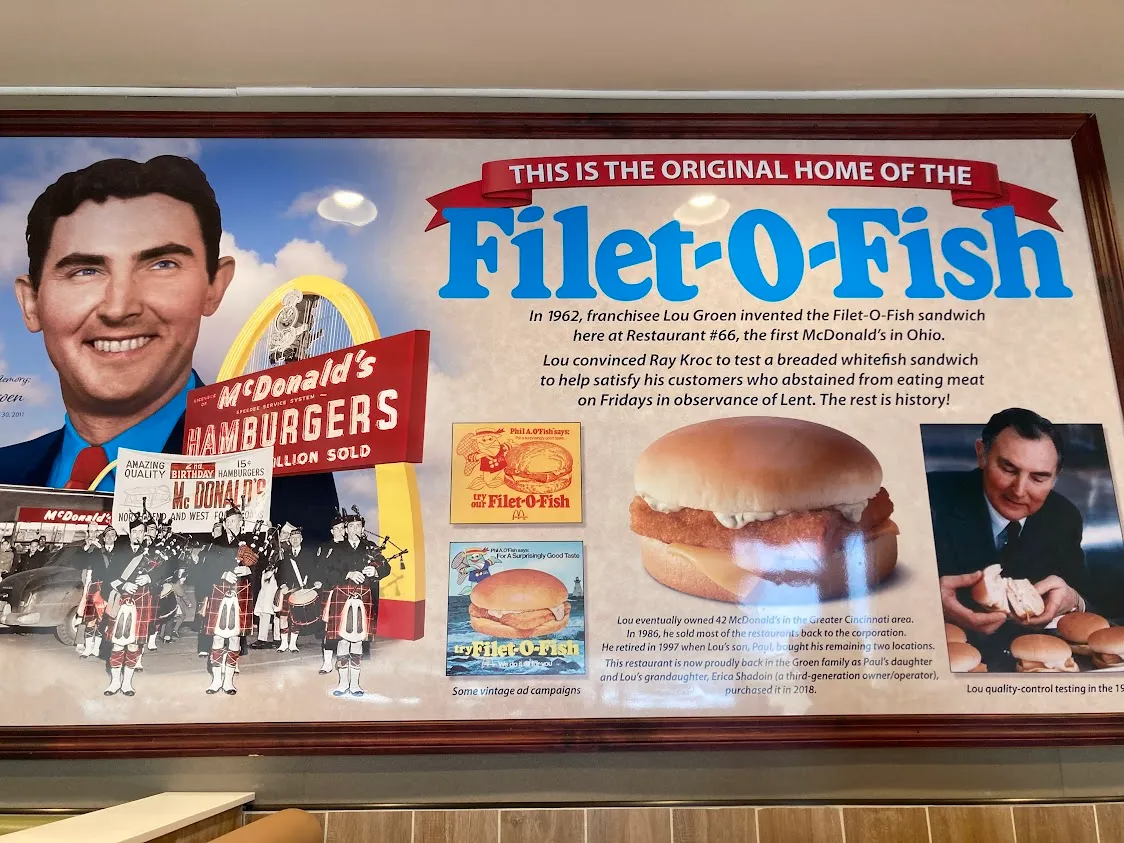
The story begins in 1962 in Cincinnati, Ohio. Lou Groen, a franchise owner in a predominantly Catholic area, noticed Friday sales plummeting during Lent. He pitched a fish sandwich to CEO Ray Kroc, who agreed to a showdown: Groen’s Filet-O-Fish vs. Kroc’s “Hula Burger” (grilled pineapple and cheese). Customers overwhelmingly chose the fish, and by 1965, it joined the national menu.
 Open original image in a new tab
Marketing Mastery: Beyond the Bun McDonald’s didn’t stop at the product—they crafted a strategy that turned the Filet-O-Fish into an icon:
Emotional Connection: Nostalgic ads, like the 1970s jingle and a 1992 commercial featuring two nuns humorously waiting for a 59-cent Lenten deal, created cultural touchstones.
Strategic Timing: Heavy promotions during Lent (February–March) capitalized on its origins.
Memorable Branding: The jingle embedded the sandwich in pop culture.
Financial Impact:
During Lent, sales spike by 300% in some markets.
In 2016, 25% of annual Filet-O-Fish sales occurred during Lent (per McDonald’s corporate data).
It’s now a $400M+ annual product and sells over 300 million units globally each year.
Broader Lessons in Adaptability
Menu Innovation: Limited-time offers (e.g., regional twists like Old Bay-seasoned tartar sauce) keep menus fresh.
Localization: Adapting to regional tastes builds loyalty.
Storytelling: Sharing the sandwich’s origin adds authenticity.
Industry Impact
Competitors like Burger King and Wendy’s introduced Lenten seafood items.
Proved niche products can achieve mainstream appeal.
A Lasting Legacy Today, the Filet-O-Fish is more than a sandwich—it’s a lesson in responsive marketing. By listening to local markets and respecting cultural traditions, McDonald’s turned a challenge into a 60-year success story.
As I smile at the sandwich on menus today, I’m reminded: great marketing doesn’t just sell products—it solves problems. And sometimes, it starts with a jingle even a kid can’t forget.
Bibliography
Bullington, Mike. "McDonald's Filet-O-Fish Journey." McDonald's Corporation, February 26, 2016. https://corporate.mcdonalds.com/corpmcd/our-stories/article/filet_o_fish_journey.html (opens in a new tab).
"Filet-O-Fish." Wikipedia, August 6, 2005. https://en.wikipedia.org/wiki/Filet-O-Fish (opens in a new tab).
Taylor, Kate. "The Secret History of McDonald's Filet-O-Fish Sandwich." Business Insider, March 14, 2020. https://www.businessinsider.com/history-of-mcdonalds-filet-o-fish-2018-1 (opens in a new tab).
This article is a tribute to the unsung heroes of marketing: the ones who see a challenge, add a dash of creativity, and turn it into somet
hing golden—or in this case, crispy and tartar-sauced.